Coal Mine Roots blower
Constant air volume / high air pressure: Positive displacement air supply, stable airflow even when resistance fluctuates, suitable for long-distance and high backpressure conditions.
Robust and durable: heavy-duty cast iron and rotor hardening, resistant to dust, vibration, and wear, capable of 24-hour continuous operation.
Explosion-proof safety: Ex d i. mb explosion-proof for coal mines, and explosion-proof certification for electrical systems.
Low operation and maintenance: simple structure, low failure rate, and low long-term operating costs.
1. Underground Ventilation and Safety (Core Applications)
Main roadway ventilation: Transport fresh air over long distances (1000–3000m), remove gas, CO, and dust to prevent accumulation and oxygen deficiency; air pressure 120–150 kPa, airflow 100–200 m³/min, ensuring uniform speed with no dead spots.
Local face ventilation: Short-distance (≤500m) mobile ventilation, quickly dilute harmful gases and dust after blasting; gas concentration can drop from 0.8% to 0.05% within 30 minutes.
Gas extraction and control: Transport low-concentration gas to reduce explosion risk; Ex d I Mb explosion-proof type for coal mines, preventing sparks from escaping.
Dust control: Combine with wet dust removal to reduce underground dust concentration and prevent pneumoconiosis.
2. Mineral Processing and Coal Washing
Flotation air supply: Provide stable airflow for coal/non-ferrous metal flotation, stir slurry and attached mineral particles, improving concentrate recovery.
Dry and air separation: Use air to separate ore and waste rock, increasing grade; suitable for high-dust, high-resistance conditions.
Slurry stirring and transport: Provide airflow for slurry agitation to prevent sedimentation; transport tailings and slurry, aiding solid-liquid separation.
Coal plant dewatering/drying: Use airflow for dewatering and drying coal slurry, reducing moisture and improving coal quality.
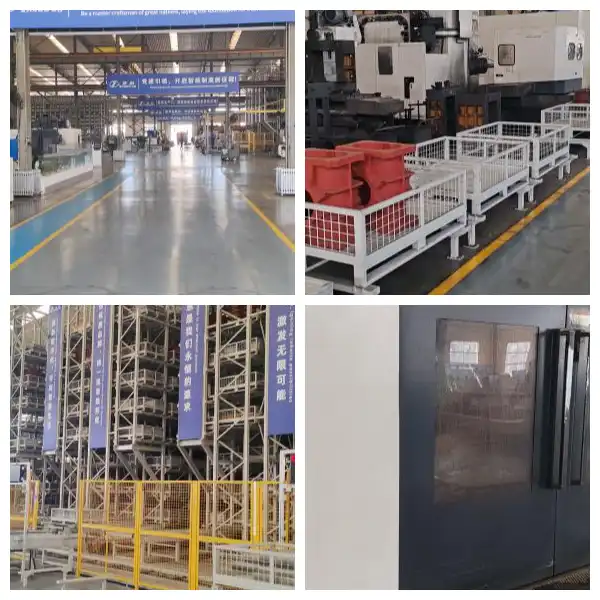
The Roots blower is a type of positive displacement fan, featuring two three-lobe impellers rotating opposite each other in a space sealed by the casing and wall panel. Since each impeller uses an involute or an envelope of an external cycloid, the three blades of each impeller are exactly identical, and the two impellers are also identical, greatly reducing the difficulty of processing. CNC equipment is used during impeller processing, ensuring that no matter where the two impellers rotate, with the center distance unchanged, a minimal gap can be maintained, thereby guaranteeing gas leakage within the allowable range.
The two impellers rotate facing each other. Because the gaps between impellers, between impellers and casing, and impellers and wall panels are extremely small, the intake port forms a vacuum state. Under atmospheric pressure, air enters the intake chamber. Then, two of the blades of each impeller, together with the wall panel and casing, form a sealing chamber. As the impeller rotates, the air in the intake chamber is continuously carried by the two blades into the exhaust chamber. Because the impellers inside the exhaust chamber mesh, the air between the two blades is squeezed out. With this continuous operation, air is continuously delivered from the air inlet to the outlet—this is the entire working process of the Roots fan.
Characteristics
Thanks to the use of a three-lobe rotor structure and a well-designed structure at the inlet and outlet inside the housing, the fan has low vibration and low noise.
The impeller and shaft are integrated structures with no wear, ensuring the fan's performance remains unchanged and can run continuously over long periods.
Fans have high volume utilization and high volumetric efficiency, with a compact structure and flexible installation methods.
A complete range of models can meet the needs of different users and applications.
Operating conditions
1. The inlet steam temperature of the transported medium should generally not exceed 40°C.
2. The particle content in the medium must not exceed 100mg/m3, and the maximum particle size must not exceed half of the minimum working gap.
3. During operation, the bearing temperature must not exceed 95°C, and the lubricating oil temperature must not exceed 65°C.
4. The operating pressure must not exceed the pressure increase range specified on the nameplate.
5. The clearance between the Roots blower impeller and casing, impeller and side plates, and impeller between impellers is already adjusted at the factory; ensure this clearance is maintained during reassembly.
6. When operating the Roots blower, the oil levels in the main and auxiliary oil tanks must be between the two red lines of the oil level gauge.
7. Check whether any parts of the inlet and outlet connections have been forgotten to be tightened, and whether the piping supports are complete. For blowers and vacuum pumps that require cooling water, check whether the installation of cooling water meets the requirements.