


Industrial Blowers Move From Bearings to Maglev Uptime
In wastewater treatment and process industries, blower upgrades are no longer judged only by airflow and pressure. Buyers increasingly evaluate whether a blower can reduce plant noise, control vibration, simplify installation and move routine service from daily intervention toward monitoring-based operation. The technology path now extends from optimized bearing centrifugal fans to air suspension blowers, magnetic suspension centrifugal blowers and high-efficiency permanent magnet direct-drive blowers.
The Bearing Route Still Has Serious Engineering Value
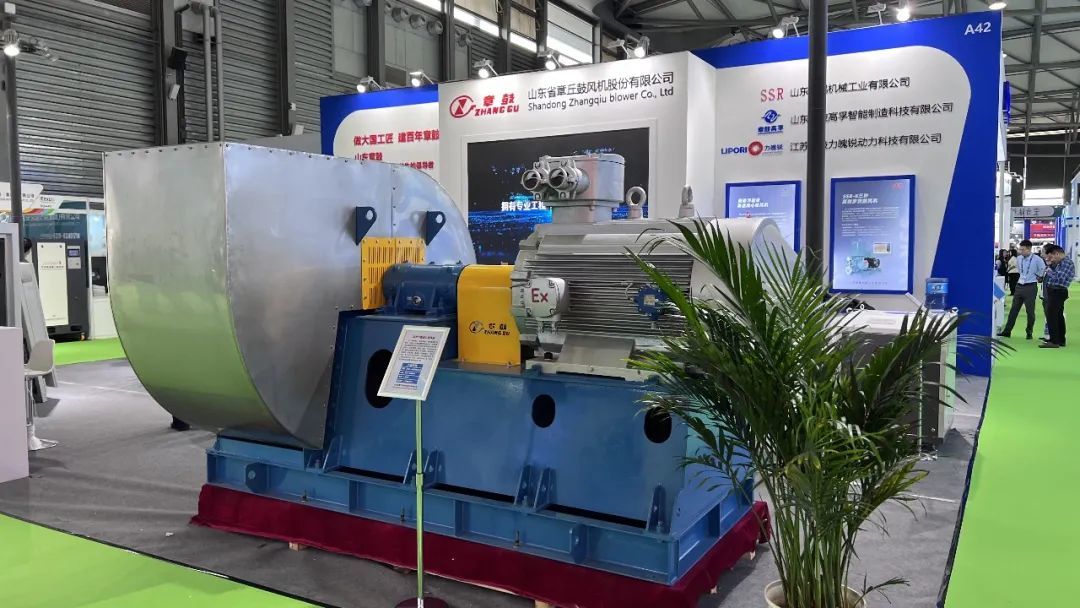
Traditional bearing-based fan technology has not disappeared; it has become more refined. The SiPESC series high-efficiency energy-saving centrifugal fan shows how far a bearing route can be optimized through CAE-based simulation, failure mechanism analysis and digital model iteration. Its structure uses a newly designed bearing box, imported brand bearings and high-strength steel plate, while vibration is controlled at ≤ 2.5 mm/s.
The fan reaches 91% efficiency, meets national Level 1 energy efficiency and uses a covered casing design to help lower noise. Its aerodynamic performance also provides a wide high-efficiency range, a relatively flat performance curve and a large flow regulation range. For projects that value mature mechanical structure, stable operation and familiar maintenance routines, this remains a practical option.
Key parameters include:
| Item | SiPESC High-Efficiency Centrifugal Fan |
|---|---|
| Flow | 60,000–80,000 m³/h |
| Total pressure | 6,000–9,500 Pa |
| Efficiency | 91% |
| Vibration | ≤ 2.5 mm/s |
| Main features | Level 1 energy efficiency, low noise, wide high-efficiency range |
Air Suspension Blowers Reduce Friction and Daily Service
Air suspension centrifugal blowers represent a clear shift away from conventional mechanical transmission. They use a high-speed permanent magnet motor directly coupled with a high-efficiency three-dimensional flow impeller. This direct-coupled arrangement avoids a speed-increasing device, reducing mechanical links that can contribute to energy loss, vibration and service work.
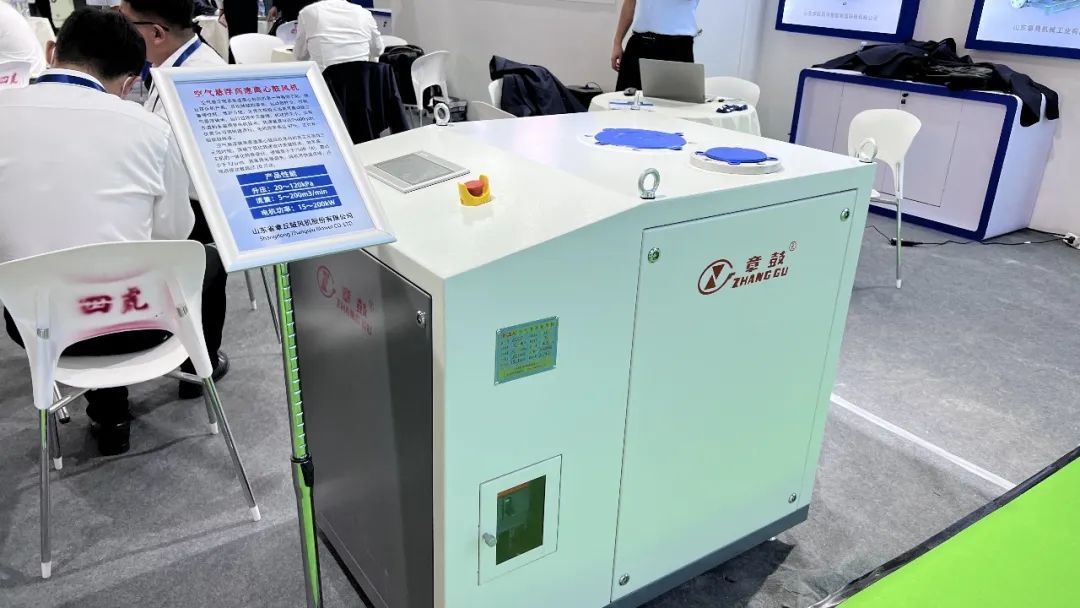
The design highlights low noise, self-balancing technology, active vibration damping and very small body vibration. Noise is described at around 80 dB, which suits facilities where equipment noise is a practical operating concern. The integrated skid-mounted structure also supports convenient installation, one-button start-stop and intelligent control.
For wastewater treatment, food and pharmaceutical production, petrochemical processing, leather printing and dyeing, metallurgy, pollution control and cement building materials, this type of blower is positioned for energy efficiency, low vibration and maintenance-free operation.
Magnetic Suspension Blowers Push the Upgrade Further
Magnetic suspension centrifugal blowers follow a similar high-speed direct-drive logic, combining a permanent magnet motor with a three-dimensional flow impeller. Their distinction lies in magnetic suspension bearing technology, supported by self-balancing, active damping and intelligent control.
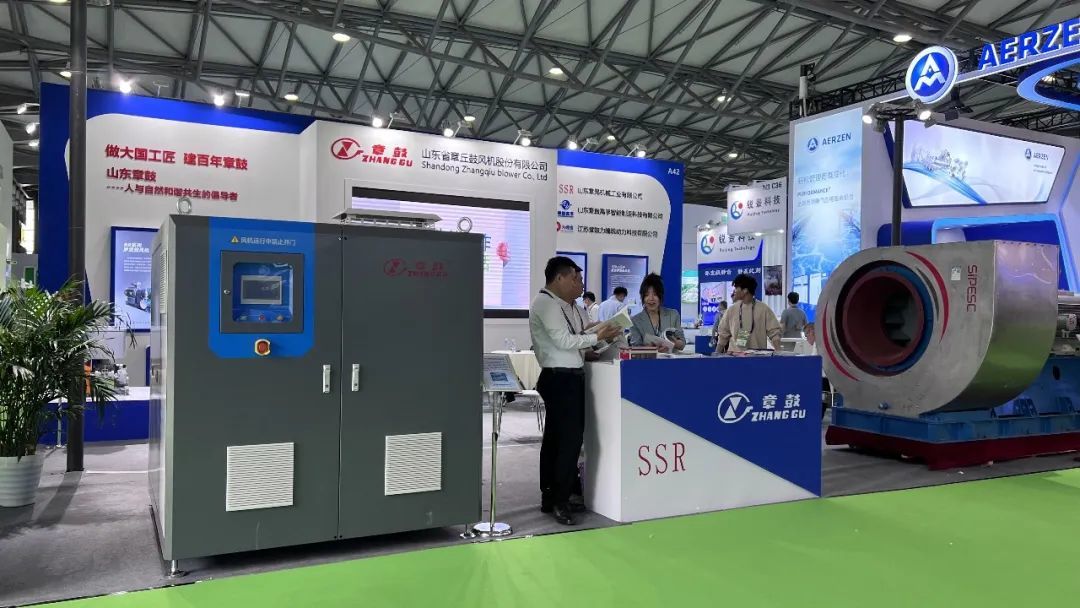
For buyers, the key point is not simply the bearing label. The operational change is that the blower is designed around low friction, very small vibration, low noise at around 80 dB, integrated installation and maintenance-free use. This makes magnetic suspension centrifugal blowers attractive where shutdown sensitivity, environmental requirements and limited maintenance resources all matter.
Permanent Magnet Direct Drive Adds Another Upgrade Path
Magnetic suspension is not the only route to a modern blower upgrade. The high-efficiency permanent magnet direct-drive blower uses a high-speed permanent magnet synchronous motor with speed up to 30,000 rpm, directly matched with a three-dimensional flow impeller. It does not require a speed-increasing device, supporting higher energy efficiency.
This product uses rolling or sliding bearings and is positioned for reliability, stability and stronger load-bearing capacity compared with magnetic suspension and air suspension routes. It can be configured in single-stage or two-stage structures, with a skid-mounted design to reduce floor space.
Performance coverage includes:
- Inlet flow: 50–2,000 m³/min
- Pressure rise: 30–500 kPa
- Motor power: 50–2,000 kW
- Sealing options: labyrinth seal, carbon ring seal and dry gas seal
- Wetted-part materials: QT500, 304/316L, 2205/2507 and TC4
Its stated advantages include high efficiency, low noise and more than 10% energy saving compared with conventional gearbox products. It is suitable for vacuum and positive-pressure industries, including paper vacuum dewatering and wastewater treatment.
Choosing the Right Route
The strongest upgrade plan depends on the site priority. If the main goal is maintenance-free operation with low noise around 80 dB, air suspension and magnetic suspension centrifugal blowers are natural candidates. If the project emphasizes load capacity, broad pressure coverage and material adaptability, the permanent magnet direct-drive blower deserves close evaluation. If the site requires proven mechanical familiarity, low vibration and a wide high-efficiency operating zone, the SiPESC high-efficiency centrifugal fan remains highly relevant.
| Technology | Main structure | Noise and vibration | Maintenance direction | Suitable focus |
|---|---|---|---|---|
| SiPESC centrifugal fan | New bearing box, imported bearings, covered casing | Low noise, vibration ≤ 2.5 mm/s | Conventional mechanical maintenance | Level 1 efficiency and stable operation |
| Air suspension centrifugal blower | High-speed PM motor, direct-coupled impeller, skid-mounted design | Very small vibration, around 80 dB | Maintenance-free | Wastewater and process industries |
| Magnetic suspension centrifugal blower | Magnetic suspension bearing, high-speed PM motor, intelligent control | Very small vibration, around 80 dB | Maintenance-free | Low vibration and intelligent operation |
| PM direct-drive blower | High-speed PM synchronous motor, rolling/sliding bearings | Lower noise than gearbox products | Reduced mechanical links | High load, broad pressure and media adaptability |

Upgrade Checklist for Buyers
Before selecting a blower, buyers should define the target noise level, maintenance strategy, flow and pressure range, sealing requirements, material compatibility, installation space and automation needs. A clear comparison of these points helps determine whether the project should move from optimized bearings to air suspension, magnetic suspension or permanent magnet direct-drive technology.
FAQs
Q1: Which blower types are described as maintenance-free?
Air suspension centrifugal blowers and magnetic suspension centrifugal blowers are described with maintenance-free features, integrated skid-mounted structures, one-button start-stop and intelligent control.
Q2: Which products are associated with noise around 80 dB?
Air suspension centrifugal blowers and magnetic suspension centrifugal blowers are described as having very small body vibration and blower noise around 80 dB.
Q3: Is a permanent magnet direct-drive blower the same as a magnetic suspension blower?
No. The permanent magnet direct-drive blower uses rolling or sliding bearings, while the magnetic suspension centrifugal blower uses magnetic suspension bearing technology.
Q4: When is the SiPESC centrifugal fan a suitable choice?
It is suitable when buyers value Level 1 energy efficiency, low vibration, low noise, wide high-efficiency operation and a mature bearing-based mechanical structure.
Q5: Which blower route supports broader material and sealing options?
The high-efficiency permanent magnet direct-drive blower supports labyrinth, carbon ring and dry gas seals, with material options including QT500, 304/316L, 2205/2507 and TC4.


