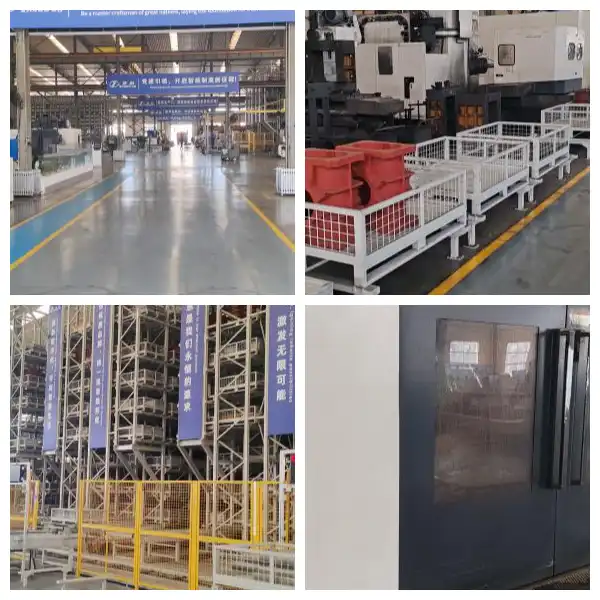
Multistage Turbine Blower
Multi-stage centrifugal blowers are widely used in various applications such as supplying air to smelting blast furnaces and iron-making furnaces, supporting coal washing jigs, mineral flotation, wastewater aeration, chemical gas production, and other situations requiring air delivery. They can also be used to convey other special gases. This series of blowers features high efficiency, low noise, stable operation, no pulsation, a wide stable operating range, and the ability to deliver clean, dry, oil-free gas. They also have few wear parts and are easy to install, operate, and maintain.
The multi-stage centrifugal blower is a type of blower equipment that uses a series of multi-stage impellers arranged in tandem. Adjacent impellers are connected by guide vanes, with a pressure range of 15 kPa to 0.2 MPa and a compression ratio of 1.15–3. It is widely used in wastewater treatment, blast furnaces in metallurgy, mine flotation, chemical gas production, and other fields, capable of conveying air and special gases. It features oil-free operation, low pulsation, and clean, dry gas delivery.
The equipment consists of the main unit (including the blower, motor, and combined base) and supporting accessories, using direct drive or belt drive. Impellers are made of aluminum alloy or high-strength alloy steel, the main shaft is made of carbon steel or alloy steel, and sealing uses a labyrinth structure to prevent leakage. Performance covers a flow range of 15–500 m³/min, continuous operation for over 1 year, and operating noise below 85 dB(A). Some models utilize a three-element meridional combination impeller and wing-type recirculator design, achieving aerodynamic efficiency above 78%, and support variable frequency speed control and intelligent monitoring. The bearing system is configured with rolling or sliding types, with lubrication options including lithium-based grease lubrication and pressure oil lubrication.
The multi-stage centrifugal blower consists of three parts:
1. Main unit: blower main unit, electric motor (standard type, outdoor type, explosion-proof type), main unit and electric motor share a common base, and the main unit is directly coupled to the motor by a coupling.
2. Auxiliary components: bend pipe, silencer, filter, general-purpose wire mesh filter, and special-purpose filters (such as microporous aeration, low, medium, and high-grade filters).
3. Supporting parts: blower inlet butterfly valve (manual or motorized), motor control start cabinet, flexible joint.
The D series multi-stage centrifugal blower is multi-stage, single suction, and double-supported. It adopts a coupling drive. Viewed from the motor end, the blower rotates clockwise. The fan has both high-speed and low-speed versions. The main shaft is designed as a rigid shaft, with a non-contact labyrinth seal that prevents wear and overheating, providing excellent sealing. The bearing housing is separate from the casing.
The casing is made of gray cast iron. For blowers below D400, the casing is radially divided and in a continuous series configuration. The rotor shaft is made of high-quality carbon steel, and the impeller is made of aluminum alloy casting. For blowers D400-2 and above, the casing is a continuous series type, the main shaft is made of high-strength alloy steel, and the impeller is made of high-strength alloy steel. Labyrinth seals are installed at each impeller inlet ring, between stages, and at both ends of the casing to prevent gas leakage. The blower rotor is balanced statically and dynamically to ensure smooth operation.
The multi-stage centrifugal blower uses both rolling and sliding bearings. Usually, blowers below D400 use rolling bearings lubricated with lithium-based grease; larger units use sliding bearings with pressure oil supply for forced lubrication, using No. 32 or 46 turbine oil. The lubrication system includes a main shaft pump, motor oil pump, oil tank, oil cooler, oil filter, and high-level oil tank. In the event of a power failure, the high-level oil tank can maintain lubrication for a certain period, ensuring safe shutdown of the unit.