


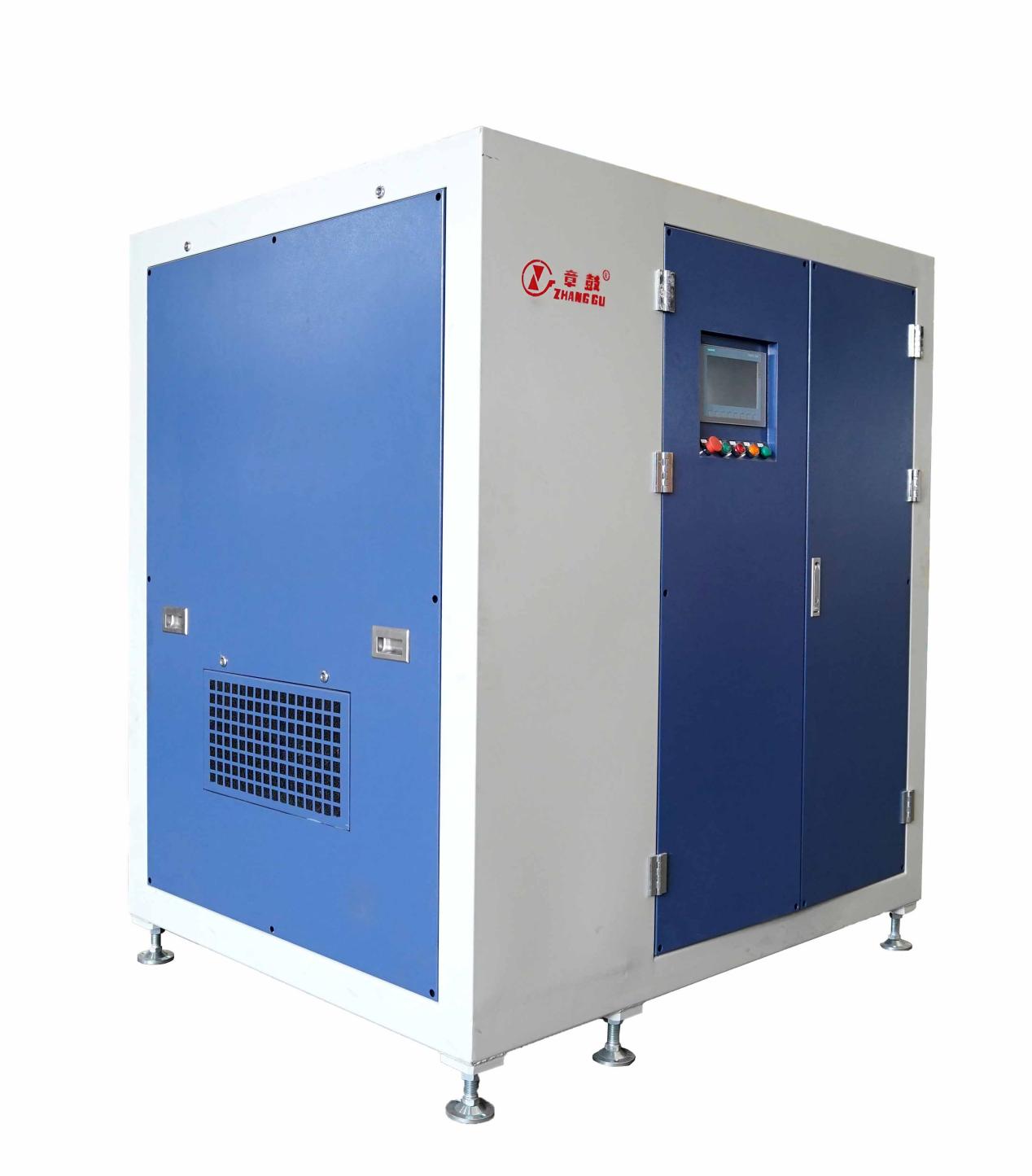
Maglev blower
1. High-Efficiency Impeller
The high-efficiency impeller features a three-dimensional flow design, and five-axis machining technology ensures precise manufacturing.
2. Magnetic Levitation Bearings
No mechanical wear, low energy consumption, and semi-permanent lifespan.
3. Integrated Structural Design
The fan impeller is directly mounted on the motor shaft, integrated with the control system, and housed within the unit, making the structure simple and compact.
4. Easy Installation and Maintenance
No lifting equipment or high spaces are required, no special foundation is needed, maintenance is convenient, and it also saves on the construction cost of the machine room.
5. Modular System Design
Multiple blowers can work in parallel according to different user flow requirements, providing a wide adjustment range and high flexibility.
The magnetic levitation blower is a type of mechanical equipment used for transporting gas. It utilizes core technologies such as magnetic levitation bearings, a three-dimensional impeller, a high-speed permanent magnet synchronous motor, efficient frequency conversion speed control, and intelligent monitoring and control. During startup, it first levitates and then rotates, operating without friction and without the need for lubrication. The three-dimensional impeller is directly connected to the rotor, resulting in zero transmission loss. It is a high-tech, eco-friendly, energy-saving product.
The main components include a high-efficiency centrifugal impeller, magnetic levitation bearing, permanent magnet synchronous motor, and dedicated frequency converter. This type of fan adopts an integrated design, with its high-speed motor, frequency converter, magnetic levitation bearing, and microprocessor control panel all designed and integrated as one unit. Its core lies in the magnetic levitation bearing and permanent magnet motor technology. 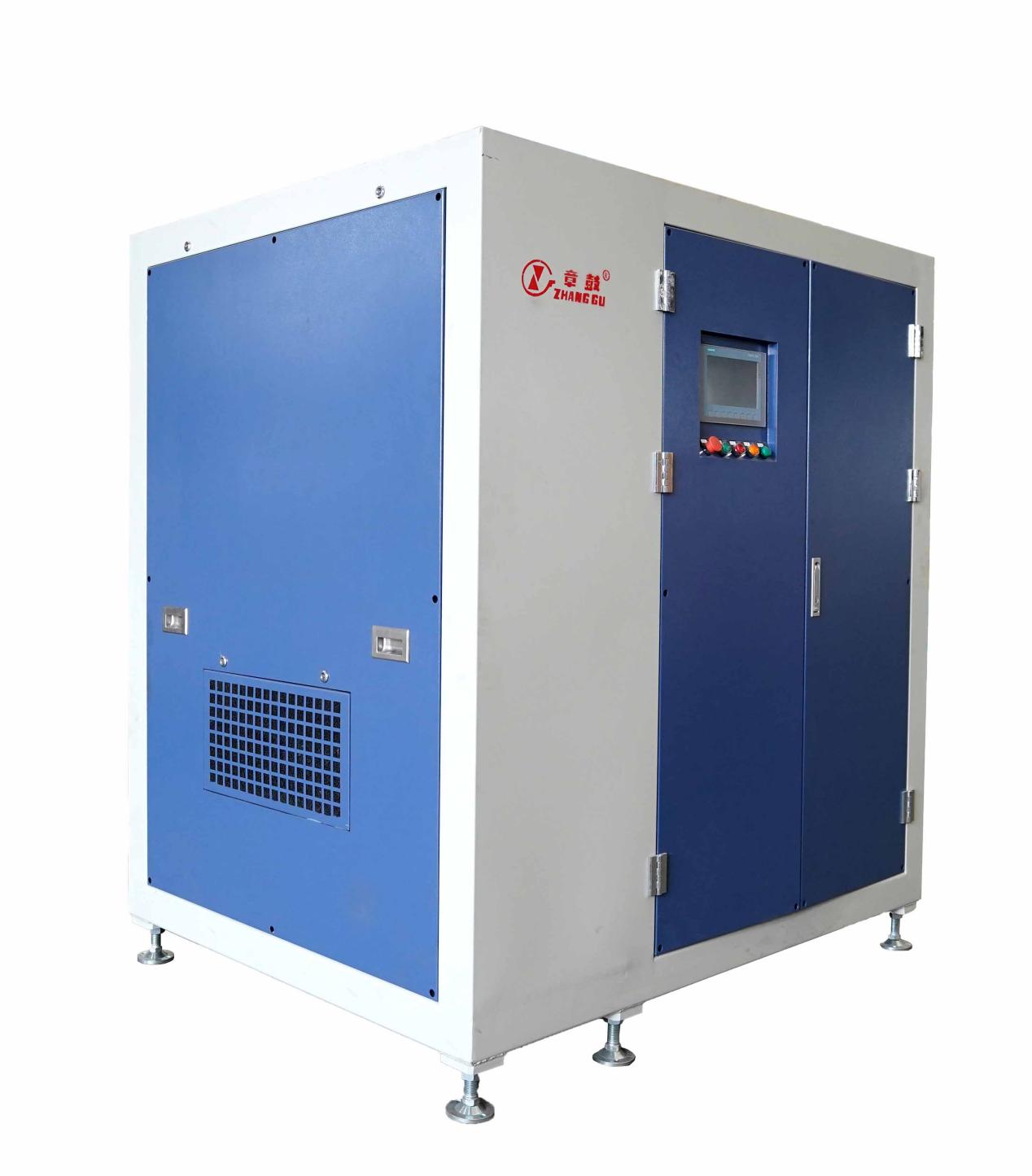
(1) High-speed centrifugal impeller: The impeller is designed based on ternary flow theory with optimized parameters to maximize its efficiency and broaden the operating range. It is made of high-strength forged aluminum or titanium alloy, offering strong deformation resistance. Precision machining is done via a CNC machining center, providing better corrosion resistance. According to measurements by experts at the National Fluid Laboratory, the impeller can achieve a maximum working efficiency of 85%.
(2) High-speed permanent magnet synchronous motor: Permanent magnets are installed on the motor's main shaft to ensure shaft magnetism. The motor's stator is wound with silicon steel sheet coils that generate oscillating magnetic force. During operation, the rotational speed and oscillating magnetic field remain synchronized, achieving synchronous conduction. The permanent magnet motor uses a magnetic levitation bearing, featuring no mechanical friction, low noise, low vibration, and long lifespan, with a maximum speed of 50,000 rpm.
(3) Magnetic levitation bearing: The shaft is stably levitated through controllable electromagnetic attraction. During rotation, the shaft experiences no mechanical resistance, resulting in high efficiency, no wear, maintenance-free operation, and no need for lubrication, ensuring that the discharged air is completely oil-free.
(4) Motor intelligent control system: Magnetic levitation blowers generally use vectorless frequency control, where motor rotation is regulated by adjusting the frequency, which in turn controls the blower's airflow to meet various operational needs. The intelligent control system can predict surge and enable local control. Additionally, with the installed GPRS system, remote monitoring and data transmission are possible.
High-Efficiency Impeller
The high-efficiency impeller features a three-dimensional flow design, and five-axis machining technology ensures precise manufacturing.
2. Magnetic Levitation Bearings
No mechanical wear, low energy consumption, and semi-permanent lifespan.
3. Integrated Structural Design
The fan impeller is directly mounted on the motor shaft, integrated with the control system, and housed within the unit, making the structure simple and compact.
4. Easy Installation and Maintenance
No lifting equipment or high spaces are required, no special foundation is needed, maintenance is convenient, and it also saves on the construction cost of the machine room.
5. Modular System Design
Multiple blowers can work in parallel according to different user flow requirements, providing a wide adjustment range and high flexibility.


