


Quiet Smart Blowers Are Becoming the New Buying Standard
From Hannover’s industrial halls to Moscow’s equipment exhibitions, one market signal is becoming hard to ignore: international buyers are no longer evaluating an industrial blower as a single mechanical purchase. They are comparing low-noise blower performance, lifecycle energy use, vibration stability, digital operation, and retrofit compatibility as parts of one integrated decision.
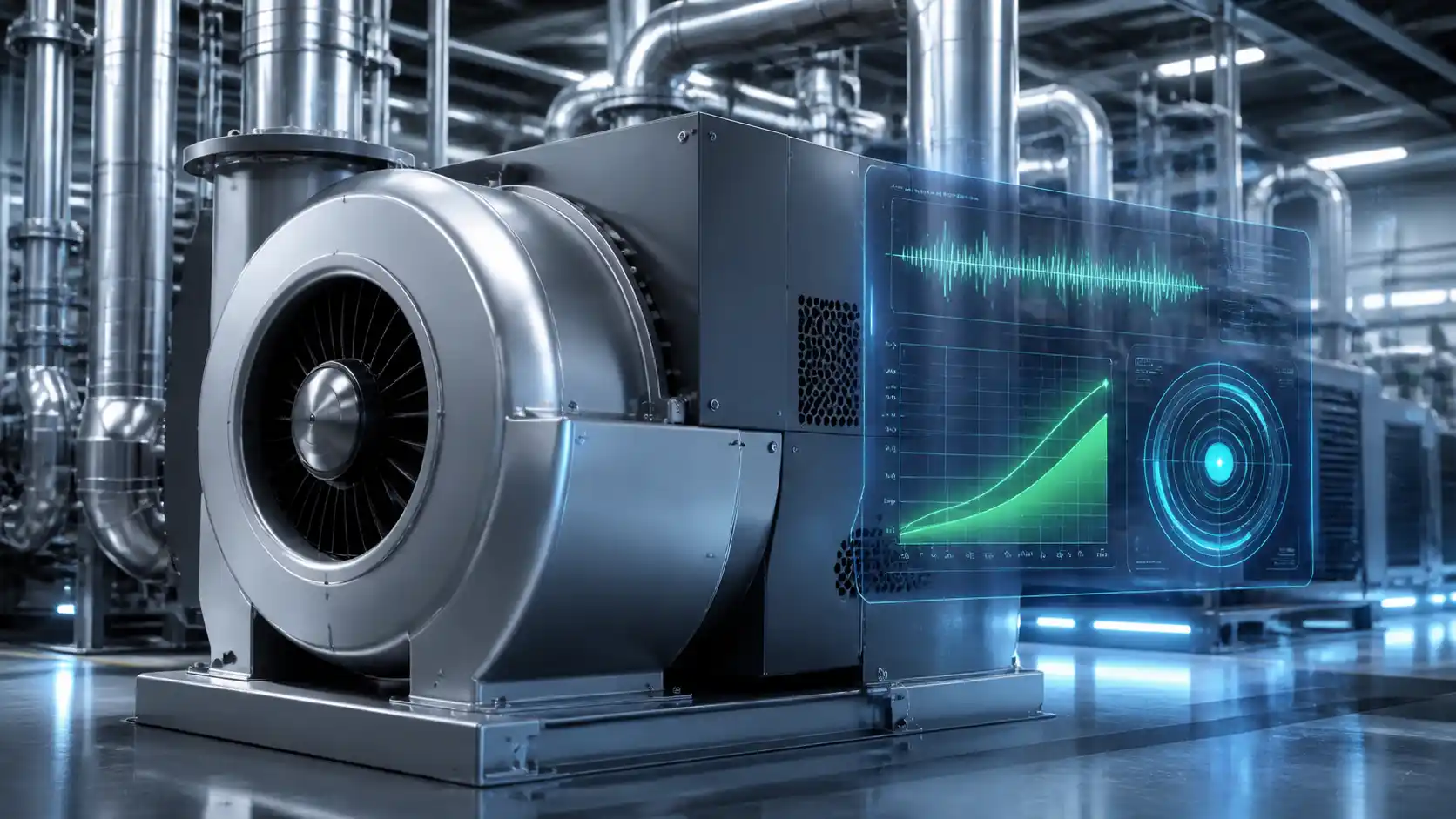
Against this backdrop, procurement criteria for a low-noise blower system are shifting from simple price comparison toward long-term, system-level performance.
Why Buyers Are Moving Beyond Standalone Equipment
In wastewater treatment, petrochemical processing, food and pharmaceutical production, metallurgy, cement building materials, and other continuous-duty industries, blower rooms are increasingly judged by practical operating outcomes. A low purchase price matters, but it rarely answers the full question. Will the low-noise blower system remain stable under long operating cycles? Can it support energy-saving targets? Does the installation help reduce plant noise? Can the operator monitor equipment health before a fault becomes downtime?
This is why the international market is shifting toward integrated blower solutions. A complete solution may combine centrifugal blowers, Roots blowers, multistage centrifugal blowers, drive systems, electrical control equipment, noise-reduction design, and service support. The trend is especially visible in Europe and CIS markets, where older facilities often prefer targeted upgrades rather than rebuilding entire plants.
Low Noise Starts With Engineering, Not Add Ons
A true low-noise blower is not created only by adding insulation after installation. It begins with airflow design, casing structure, bearing configuration, and mechanical balance.
Shandong Zhangqiu Blower’s SiPESC series high-efficiency energy-saving centrifugal fan reflects this direction. The product uses the SiPESC CAE software platform for failure mechanism analysis, systematic simulation, and digital model optimization. Its covered casing supports lower noise, while the structure uses a new bearing box, imported brand bearings, and high-strength steel plate.
Key parameters include 60,000–80,000 m³/h flow, 6,000–9,500 Pa total pressure, 91% efficiency, and vibration ≤2.5 mm/s. For buyers, these figures matter because lower vibration is closely connected with stable operation, bearing life, and acoustic comfort. A low-noise blower with a flat performance curve and wide high-efficiency area can also give operators more flexibility when process demand changes.
Smart Control Changes the Procurement Conversation
Smart control is becoming the second half of the buying decision. Market discussions around the Product Center increasingly connect mechanical equipment with digital operation and maintenance.
Shandong Zhangqiu Blower’s digital operation and maintenance direction is reflected in its intelligent equipment and industrial IoT initiatives, including an intelligent condition monitoring system developed for industrial equipment applications.
That system is built around data acquisition, data processing, and data management, with IoT terminals, core algorithms, and an intelligent cloud management platform as key technical nodes.
In practical industrial environments, this type of digital approach supports real-time status awareness, abnormal condition alerts, remote maintenance possibilities, and more disciplined equipment management. For a low-noise blower project, this reinforces a broader procurement idea: quiet operation and intelligent visibility are now evaluated together.
Retrofit Demand From Europe to CIS Markets
Many industrial buyers are not starting from a blank site. They are operating older blower rooms, existing pipelines, and legacy control cabinets. That makes retrofit planning essential. A practical upgrade usually begins with three checks: current noise and vibration, current airflow and pressure demand, and current energy consumption under real working conditions.
Once the baseline is clear, buyers can compare suitable technologies. For aeration and process air, Roots blowers, high-speed centrifugal blowers, magnetic levitation centrifugal blowers, air-suspension centrifugal blowers, and multistage centrifugal blowers may all be considered depending on duty conditions.
Shandong Zhangqiu Blower has displayed several of these product families at international exhibitions, including ASIA WATER 2024, Hannover Industrial Expo, Russian waste management and water treatment exhibitions, and the Moscow Vacuum Equipment Exhibition. For retrofit buyers, these events provide a direct way to evaluate low-noise blower options and discuss integration into existing plants.
What an Integrated Low-Noise Blower Package Should Include
For procurement teams, the most useful evaluation is no longer a one-line comparison of flow and pressure. A stronger checklist for an integrated low-noise blower package includes:
- Whether the selected low-noise blower matches the required operating point
- Whether aerodynamic design supports a wide high-efficiency range
- Whether casing and vibration control reduce acoustic and mechanical stress
- Whether the drive and control system can support stable operation
- Whether sensors, monitoring, and maintenance planning are included
- Whether installation can fit existing pipelines and plant layout
This approach also explains why electrical control equipment and integrated systems are receiving more attention. A low-noise blower becomes more valuable when it is specified as part of a stable, maintainable, and energy-conscious operating package.
The Buying Standard Is Becoming Clearer
The movement from Hannover to Moscow shows a practical change in industrial purchasing. Buyers still need durable equipment, but they increasingly define value through quiet operation, energy performance, digital visibility, and integration quality.
For wastewater plants, petrochemical facilities, and continuous manufacturing sites, the preferred solution is becoming a low-noise blower system that can operate reliably, support energy-saving goals, and fit into smarter maintenance routines.
FAQs
What makes a low-noise blower different from a standard blower?
A low-noise blower relies on coordinated aerodynamic design, casing structure, vibration control, and mechanical stability rather than a single noise-control accessory.
Why are smart control systems important in blower projects?
Smart control supports condition monitoring, abnormal status alerts, remote maintenance possibilities, and more consistent equipment management for the blower room as a whole.
Which industries commonly evaluate low-noise blower upgrades?
Wastewater treatment, petrochemical processing, food and pharmaceutical production, metallurgy, cement building materials, and other continuous-duty industries commonly evaluate these low-noise blower upgrades.
What should buyers check before a blower retrofit?
Buyers should review existing noise, vibration, airflow, pressure, energy consumption, pipeline compatibility, and control system requirements before selecting a new low-noise blower package.
Are centrifugal and Roots blowers used for the same applications?
They can overlap in some process-air duties, but final selection depends on flow, pressure, operating pattern, efficiency needs, and site conditions. A retrofit may even combine different low-noise blower technologies across one plant.
Where to Explore Suppliers That Match These Standards
Procurement teams seeking integrated low-noise blower and control solutions can review the product and engineering portfolio of Shandong Zhangqiu Blower Co., Ltd. via its industrial Product Center. The site provides detailed information on centrifugal blowers, Roots blowers, multistage centrifugal blowers, electrical control systems, and related services to support project evaluation and supplier comparison.


