


When Air Cooled Roots Blowers Make Cooling Water Unnecessary
Cooling-water loops on blower skids might look routine, but they undeniably add investment, complexity, and maintenance risks. In many low- to medium-pressure aeration and conveying projects, an air-cooled rotary lobe blower can run safely and efficiently without cooling water—provided the entire system is designed and operated within the proven performance envelope.
With over 50 years of blower design and manufacturing experience, we at Shandong Zhangqiu Blower Co., Ltd have fully verified this approach with our ZG series Roots blower. Its advanced aluminum alloy, air-cooled oil tank, and robust casing structure allow single-stage operation up to 98 kPa without cooling water, delivering exceptional reliability when used exactly as specified in our official product data and manuals.

The Hidden Costs of Cooling-Water Systems
On many aeration tanks and pneumatic conveying skids, designers tend to add cooling-water circuits to Roots blowers almost by default. In practice, we have observed that this approach can introduce several operational pain points:
Extra capital cost – You have to invest in additional piping, valves, pumps, instrumentation, and civil works.
More failure modes – Water systems bring risks of leakage, fouling, scaling, and even freezing in harsh winter climates.
Outdoor reliability risks – Rain exposure accelerates coating damage, bolt corrosion, and electrical aging if protection and regular inspection are inadequate.
Higher maintenance load – Operators must constantly monitor water flow and temperature, clean lines, and check valves on top of routine blower maintenance.
Field notes gathered in our extensive knowledge base show that outdoor Roots units exposed to the elements are prone to paint peeling, bolt rust, inlet silencer damage, and faster electrical wear. Even for a highly durable air-cooled rotary lobe blower operating without cooling water, we strongly recommend a simple rain shelter and post-rain inspections to protect its appearance and long-term reliability.
Our ZG Series Roots Blower: The Air-Cooled Standard
Our ZG series Roots blower is an advanced rotary lobe blower developed by integrating imported American technology with our proprietary engineering improvements. We proudly position it as a high cost-performance, new-generation high-pressure Roots blower within its range. It clearly demonstrates how cooling water can be safely eliminated from the system design.

Key structural features related to its air cooling and reliability include:
Special casing structure – Supports reliable running at higher pressures while significantly reducing operating noise.
Integrated rotor–shaft design – Rotors and shafts are forged as one piece, ensuring excellent rigidity and stable operation at high pressures and speeds.
Aluminum alloy, air-cooled oil tank – The oil tank utilizes a highly efficient aluminum alloy, air-cooled design. Our product documentation confirms that single-stage operation up to 98 kPa does not require cooling water.
Compact package – Features a dense skid layout. The belt uses a self-tensioning arrangement that simplifies both daily use and maintenance.
Flexible mounting – The blower body can be installed either vertically or horizontally, making the replacement of foreign models much easier for our clients.
Precision hard-tooth helical gears – Designed with a keyless connection for reliable positioning, low noise, high strength, and a remarkably long service life.
Within our published performance range below, the ZG series functions perfectly as an air-cooled rotary lobe blower; absolutely no cooling water is required for the casing or oil tank at the rated single-stage pressure:
| Item | ZG series Roots blower data |
|---|---|
| Blower flow rate | 0.43–184 m³/min |
| Blower pressure rise | 9.8–98 kPa |
| Vacuum pump flow rate | 0.52–183.9 m³/min |
| Vacuum degree | −9.8 to −49 kPa |
| Oil tank cooling | Aluminum alloy, air-cooled |
| Cooling water requirement | Not required up to 98 kPa single-stage |
Effective Temperature Control Through Proper Maintenance
Lubrication Practices for Air-Cooled Operation
According to our official operation and maintenance guidance for Roots blowers:
Use 68# mechanical oil in summer and 100# mechanical oil in winter.
Fill the main and auxiliary oil tanks exactly to the sight-glass marks (around the 3 mm / 2 mm oil center, as detailed in our guidance).
Replace the lubricating oil every three months during your routine maintenance schedule.
Ensure the upper and lower oil covers on the main and auxiliary tanks are tightly secured to prevent any leakage.
These straightforward rules are absolutely essential to keep bearing and gearbox temperatures well under control during air-cooled service.
Start-Up, Loading, and Shutdown Procedures
Before starting a ZG series or any similar air-cooled rotary lobe blower, our technical experts recommend that operators:
Check all fasteners and foundation bolts thoroughly.
Confirm that inlet and outlet piping and valves are correctly installed and independently supported.
Verify that internal clearances meet our strict requirements and that no foreign objects remain inside.
Add the correct grade of oil to both the main and auxiliary tanks.
For other models in our portfolio that do use cooling water, ensure the water temperature is ≤ 25 °C and the flow is ≈ 10 L/min.
Open the inlet and outlet valves and manually rotate the rotor to check for rubbing or any abnormal resistance.
Check the motor rotation direction against the provided nameplate.
Upon start-up, the blower should be run with the discharge vent or bypass valve completely open. As the operation stabilizes, the vent is closed gradually so that the working pressure rises smoothly to the specified value (typically around 0.04–0.05 MPa). For shutdown, the correct sequence is to first open the vent, then close the outlet valve, and finally cut the power.
When Centrifugal Blowers Become the Ideal Choice
For deeper aeration tanks and projects with stringent high-efficiency requirements, the centrifugal technologies in our extensive portfolio complement our high-pressure Roots blower solutions rather than simply replacing them.
Multi-stage centrifugal blowers are widely utilized in municipal wastewater treatment facilities, where aeration depths of about 7–8 meters demand higher pressure. They deliver a relatively small flow at higher pressure with superb efficiency and a suitable adjustment range for delicate biological processes.
Our single-stage high-speed centrifugal blower (such as the air suspension and magnetic suspension models) represents a new generation of products for environmental protection and energy saving. Serving municipal sewage plants, waterworks, and industrial wastewater treatment, our technical notes highlight that these units can reduce energy consumption by more than 20% compared with traditional Roots and multi-stage centrifugal units. Because of this, they are frequently selected as a premium upgrade in modern aeration projects.
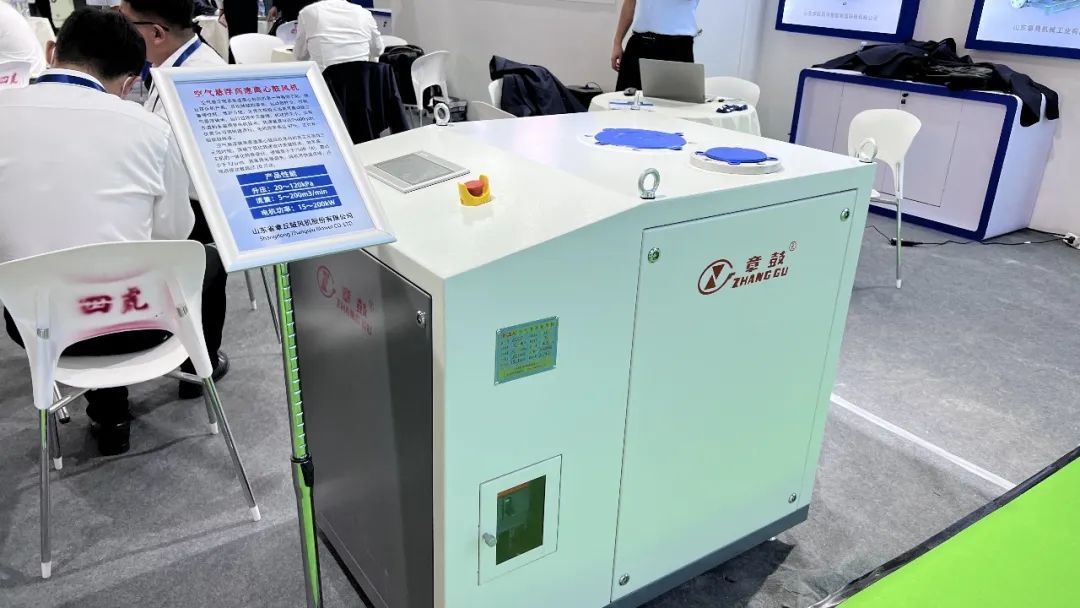
In practice, system designers often select our ZG series wastewater aeration blower packages when outlet pressure varies but flow stability is critical. Conversely, they turn to our multi-stage or single-stage high-speed centrifugal blowers when higher pressure or significant energy savings are the primary project goals.
Solutions for Pneumatic Conveying and Zero-Discharge Projects
For industrial wastewater zero-discharge systems and pneumatic conveying applications, we deploy our dedicated Roots blowers as the core equipment. Two drivetrains are commonly applied depending on the specific site requirements:
Belt-driven Roots blowers – The blower speed is adjusted via motor and blower pulleys, covering a remarkably wide flow and pressure range. Because maintenance is straightforward, we usually prefer the belt drive if there are no special operating conditions.
Direct-coupled Roots blowers – The blower shaft speed equals the motor speed; for the same blower and motor grade, the flow is completely fixed. We highly recommend this option in high-temperature environments (such as ironmaking), where belts can slip or break, and in high-static environments where ordinary belts are simply unsuitable.

Whenever there is no special requirement, our knowledge base guidance suggests choosing the belt drive first. If selection remains difficult, the baseplate size can be effectively used as a secondary criterion.
Installation Tips for Outdoor and Rainy Environments
For any air-cooled rotary lobe blower installed outdoors, ensuring free airflow around the casing and oil tank is essential. However, protection from rain is equally important. Our rainy-season maintenance notes strongly recommend that users:
Install a sturdy protective shelter directly above outdoor blowers.
Wipe away water from exposed bolts immediately after rain and apply grease if needed to prevent rust.
Protect the inlet silencers from any rainwater ingress.
Routinely inspect electrical wiring for signs of accelerated aging and repair or replace it as necessary.
Prevent rainwater from entering the casing, as this can cause severe rotor rust and subsequently reduce flow and pressure.
Implementing these simple yet highly effective measures helps maintain the long-term reliability and peak performance of both our high-pressure Roots blower units and centrifugal machines, even in the harshest outdoor conditions.
Frequently Asked Questions (FAQs)
Can the ZG series Roots blower run without cooling water?
Absolutely. Our ZG series is engineered with an advanced aluminum alloy, air-cooled oil tank. As detailed in our product data, single-stage operation up to 98 kPa does not require cooling water, provided that installation and operation strictly follow our official manual.
What oil grades and replacement intervals do you recommend?
We recommend using 68# mechanical oil in summer and 100# mechanical oil in winter. The main and auxiliary oil tanks should be filled to the specified sight-glass marks. Furthermore, to guarantee optimal performance, the lubricating oil should be replaced every three months under normal operating conditions.
How should an air-cooled Roots blower be started and stopped?
Before starting, always check the fasteners, piping, internal clearances, oil level, and motor rotation direction. Ensure the inlet and outlet valves are fully open. Start the blower with the discharge vent or bypass open, then close it gradually as the unit stabilizes so the pressure rises smoothly to your target value. For a safe shutdown, open the vent, close the outlet valve, and then disconnect the power.
When should I choose a belt drive versus direct coupling?
For most standard conveying and aeration duties, a belt drive is preferred because it allows for easy speed and flow adjustment alongside simple maintenance. However, we recommend direct coupling in high-temperature or high-static environments where standard belts might slip, break, or otherwise prove unsuitable.
When do centrifugal blowers become a better choice than Roots blowers?
For deep-tank aeration (typically around 7–8 meters of water depth) or when maximizing energy saving is your primary objective, our multi-stage centrifugal and single-stage high-speed centrifugal blower products are often the superior choice. Our internal technical evaluations indicate that the high-speed centrifugal design can reduce energy consumption by more than 20% compared to traditional Roots and multi-stage centrifugal blowers in many wastewater applications.
If you have more questions or need a customized solution, feel free to contact us at Shandong Zhangqiu Blower Co., Ltd. We are always ready to help you optimize your industrial processes!


