


Protect Continuous Oxygen and Chemical Duty with RR Series Roots Blower Sealing and Bearings
In oxygen production and chemical plants, an unexpected trip of a 罗茨鼓风机 caused by leakage, bearing damage, or poor lubrication can interrupt the process and create severe safety risks. Our RR series three-lobe Roots blower and vacuum pump, together with our related three-lobe Roots blower products, combine precise bearings, controlled assembly tolerances, and clear maintenance practices to support continuous-duty operation. The following content details key points from our technical materials so engineers can better manage risk during selection, installation, and daily operation.

RR Series and Three-Lobe Roots Blowers in Continuous Processes
The RR series Roots blower and vacuum pump are manufactured using advanced imported Japanese design and technology. Within our portfolio, the RR sits alongside the ZG, SSR, and the energy-saving SSR-K three-lobe Roots blower series, covering a wide range of flow and pressure demands typically found in oxygen generation, chemical processing, and wastewater treatment.
Unlike traditional two-lobe designs, a 三叶罗茨鼓风机 (three-lobe Roots blower) delivers three discharge events per revolution. This produces a much smoother flow and significantly reduces pressure pulsation, which in turn lowers the vibration and noise transmitted to connected piping and downstream process equipment. For continuous oxygen and chemical duty, that stability is an essential foundation for safe and reliable operation.
Engineers can easily use the product index on our website to compare RR, SSR, and SSR-K models by size, pressure range, and drive arrangement, allowing them to match the perfect unit to specific process conditions.
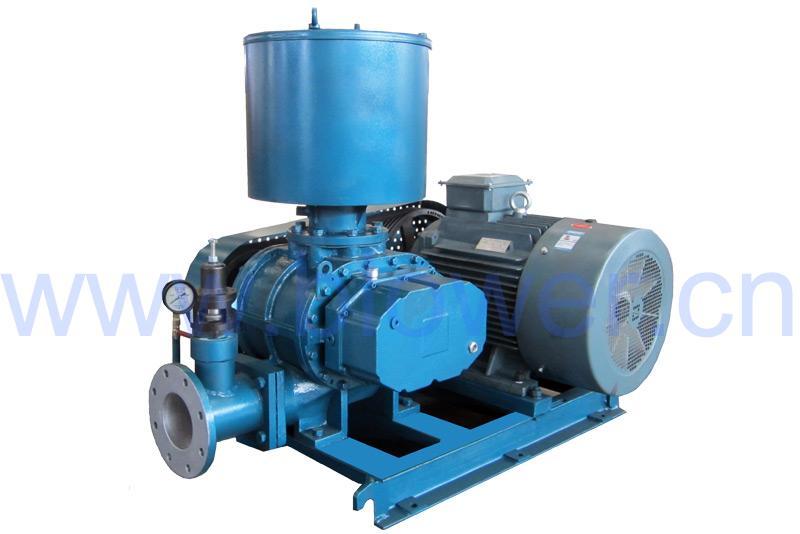
Sealing Concepts for Roots Blowers in Sensitive Media
For processes involving oxygen or special gases, leakage control and oil–gas separation are absolutely critical. In Roots blower practice and our technical literature, several primary sealing concepts are commonly utilized:
Oil seals (framework seals) at shaft ends help prevent lubricating oil from escaping the bearing housings and actively block external dust from entering the system.
Mechanical seals use a rotating ring and a stationary ring to form a precise sealing face. They are ideal where stricter leakage control is required.
Composite end-cover arrangements described in our published research combine elements such as piston rings, buffer chambers, and mechanical seals at the end cover. The ultimate goal is to keep a small amount of gas leaking from the cylinder away from directly impacting the mechanical seal faces, vastly improving safety and reliability when conveying special gases.

When specifying or auditing a 罗茨鼓风机 for oxygen or chemical service, we highly recommend users pay particular attention to:
The required leakage rate and whether gas purity is sensitive to oil contamination.
The specific layout of shaft seals and any buffer chambers at the end covers.
Maintainability of seals on-site, including access space and available tools.
Availability of matched seal kits and standard parts directly through our product center.
Bearing Accuracy, Assembly Tolerances, and Balancing
A 三叶罗茨鼓风机 normally operates at relatively high shaft speeds and must run continuously without fail. Our internal overhaul standards emphasize tight control of geometric accuracy in the rotor and bearing system:
Perpendicularity between bearings and rotor: ≤ 0.05 mm
Parallelism of journals at both rotor ends: ≤ 0.02 mm
Parallelism between rotor end faces and side plates: ≤ 0.05 mm
Rotors must pass both static and dynamic balance checks, and the rotor surfaces must be completely free from pores, blowholes, and similar casting defects. These strict measures reduce vibration and noise, helping to extend bearing life and protect delicate seals.
Some three-lobe Roots blower products shown in our materials, such as the SSR-K series, utilize self-lubricated bearings on the drive end to reduce daily inspection workloads. We advise users to always confirm the exact bearing arrangement and required accuracy on the relevant product page and technical documents when ordering RR series equipment.
Lubrication, Cooling, and Periodic Maintenance
Correct lubrication and cooling are fundamental conditions for avoiding early bearing failure and abnormal temperature spikes. For a 罗茨鼓风机 used as an aeration blower and in similar duties, our wastewater treatment maintenance guidance recommends:
Before start-up: Fill the main and auxiliary oil tanks up to the marks on the sight glasses.
Oil grades:
Use 68# mechanical oil in summer.
Use 100# mechanical oil in winter.
Oil change intervals:
First oil change after roughly 500 operating hours.
Subsequent changes about every 4,000 operating hours, adjusted based on actual load and oil condition.
During operation, the oil level must stay within the specified range. If the oil level drops abnormally, it is crucial to find and correct any leakage before returning the blower to service.
For units equipped with cooling jackets, guidance from our operational documents includes:
Cooling water temperature not higher than 25 °C.
Cooling water flow around 10 L/min.
Daily and periodic inspection points that help protect bearings and seals include:
Oil level: Check main and auxiliary tanks each shift.
Vibration: Record vertical, horizontal, and axial vibration on both bearing housings and track trends.
Temperature: Monitor bearing housings, casing, and motor bearings; investigate any gradual increases.
Sound: Listen closely for changes from a steady running noise to impact or rubbing sounds.
Belts and leakage: Check belt tension and wear, and inspect flanges and connections for seepage.
To make tracking easier, we have organized a simple maintenance matrix for our RR series and other 三叶罗茨鼓风机 in oxygen or chemical service:
| Item | Recommended frequency | Key points |
|---|---|---|
| Oil level check | Daily / per shift | Main and auxiliary tanks within marks |
| First oil change | ~500 operating hours | Check for metal particles and oil degradation |
| Regular oil change | ~4,000 hours | Adjust by load and oil condition |
| Vibration and noise check | Weekly and when abnormal | Observe three directions at each bearing housing |
| Temperature recording | Daily | Build temperature trend curves |
| Belt and leakage check | Weekly | Tension, wear, flange and valve tightness |
Installation and Start–Stop Practices That Protect Rotating Parts
Proper installation and daily operating habits lay the foundation for long seal and bearing life. Our installation safety notes for wastewater aeration blowers can be summarized for the RR series and other 罗茨鼓风机 as follows:
Preparation before installation
Read the manual carefully, confirm the model, configuration, rotation direction, and flow direction. Inspect all parts; repair any damage before installation. Inlet and outlet piping must be independently supported and not transfer weight or stress to the blower casing.Checks before trial run
Manually turn the rotor to confirm there are no tight spots or rubbing. Tighten all foundation and coupling bolts so the blower sits naturally on the base. For belt drives, check alignment and tension, and install safety guards on all exposed rotating parts. Confirm the electrical control panel matches blower power and voltage, and ensure reliable grounding.Start-up sequence
Open inlet and outlet valves and confirm cooling water flow if provided. After a brief jog to verify motor rotation, start the blower. When the unit runs smoothly, gradually close the vent valve so discharge pressure rises slowly to the required range (for aeration examples in our materials, about 0.04–0.05 MPa).Shutdown sequence
To stop, slowly open the vent valve, then close the outlet valve, and finally stop the motor. This avoids stopping the blower under pressure.
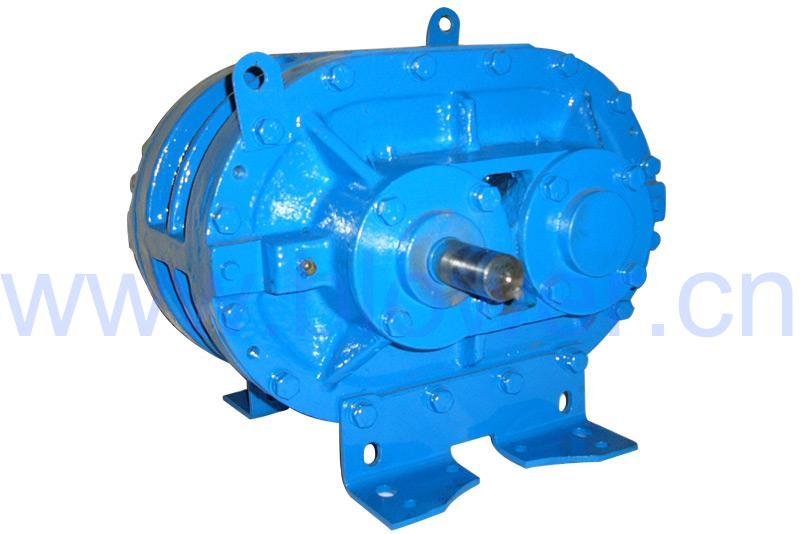
Our technical documents also note that belt drives are generally preferred where there are no special requirements, because they simplify speed and flow adjustment. In high-temperature environments such as ironmaking, or in areas with high static electricity, direct coupling or special belts are highly recommended to avoid belt slip, breakage, or static problems.

Company Information and Technical Resources
At Shandong Zhangqiu Blower Co., Ltd. (山东省章丘鼓风机股份有限公司), we focus on 罗茨鼓风机, three-lobe Roots blowers, and related pneumatic conveying and environmental equipment. The product center on our official website lists the RR, SSR, SSR-K, and other series, and provides helpful links to installation, maintenance, and application notes.
Product index: https://www.blower.cn/Product_Index.html
RR series page: https://www.blower.cn/product/181.html
Address: 明水经济开发区世纪大道东首, Zhangqiu District, Jinan
For project-specific questions on sealing, bearing arrangements, or maintenance planning, users can combine the above documents with site conditions and consult our technical team directly through the contact channels provided.
FAQs
How should I choose between RR, SSR, and SSR-K three-lobe Roots blowers?
Our product pages show the RR, SSR, and SSR-K series side by side. A common approach is:
Use our RR series as the robust base option where imported Japanese design technology is preferred.
Consider the SSR-K when energy saving is a priority; our materials show 5%–12% higher volumetric efficiency and roughly 10%–30% energy saving compared with ordinary series under similar conditions.
Use the product index to match inlet size, pressure, and drive form directly to your process requirements.
What lubrication schedule is recommended for continuous-duty Roots blowers?
According to our wastewater aeration maintenance guidance, users should:
Fill oil tanks to the indicated marks before start-up.
Change oil after the first 500 hours, then about every 4,000 hours.
Use 68# mechanical oil in summer and 100# mechanical oil in winter.
This schedule can be easily optimized based on actual load and oil condition without going below these baseline intervals.
How can early bearing or seal problems be detected in daily operation?
Effective early-warning measures described in our manuals include:
Recording three-direction vibration at both bearing housings and watching for trend changes.
Measuring bearing and casing temperatures daily and comparing them with historical data.
Listening for new impact or rubbing noises.
Checking the oil level and the outside of housings and flanges for signs of leakage.
If increased vibration, higher temperature, and abnormal sound appear together, the blower should be stopped immediately and checked for belt slip, insufficient lubrication, foreign objects, or loose fasteners.
When should belt drive or direct coupling be selected?
Our application notes clearly indicate:
Belt drive is usually selected when there are no special conditions, because it allows easy speed and flow adjustment and is simple to maintain.
Direct coupling (or special belts) is preferred for high-temperature duties such as ironmaking, or where static electricity is a concern, since ordinary belts may slip, break, or accumulate static in these harsh environments.


